Montana Tech graduate students gain global perspective at CERAWeek energy conference
Two graduate students from Montana Technological University traveled to Houston, Texas in late March for the world’s premier energy conference, CERAWeek.
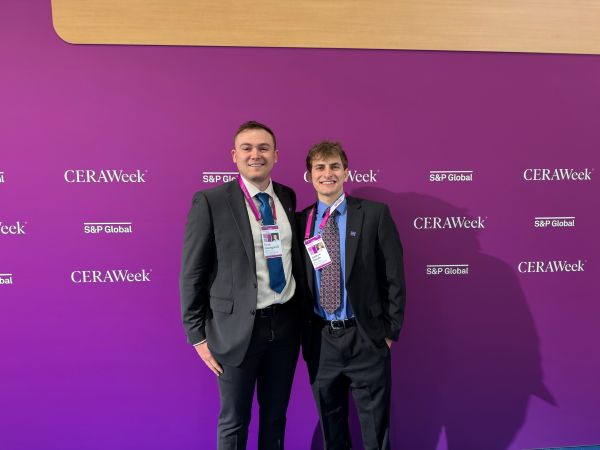
Caption: Evan Guengerich and Andrew Woods at CERA Week.
Evan Guengerich (B.S. Mechanical Engineering, ’25) and Andrew Woods (B.S. Mechanical Engineering, ’24) attended the conference as part of NextGen cohort, which is an initiative of CERAWeek to bridge the gap between the academia and industry to facilitate the discovery of new pathways for energy transition, find talent and build alliances.

Caption: Evan Guengerich with a robot at CERA Week.
Held at the George R. Brown Convention Center, CERAWeek 2026 convened 11,000 participants from more than 2,350 companies across 90 countries, giving the students a firsthand look at the scale and complexity of the global energy industry. The conference featured more than 1,400 speakers across 1,100 sessions, with attendees ranging from 1,063 chairs and CEOs and 958 C-suite executives to 179 board directors, 26 ministers and senior officials, and 450 members of the media, all engaging in dialogue as the world enters a new era of energy.
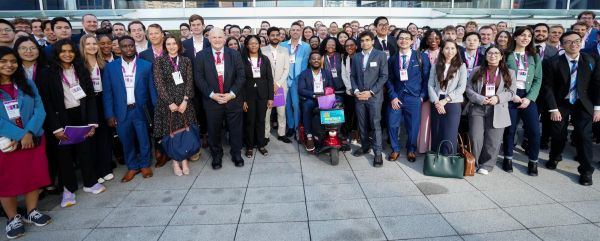
Caption: The NextGen cohort at CERA week.
“It was just on a whole new scale,” Guengerich said. “You don’t see 10,000 people running down a hallway talking to each other very often.”
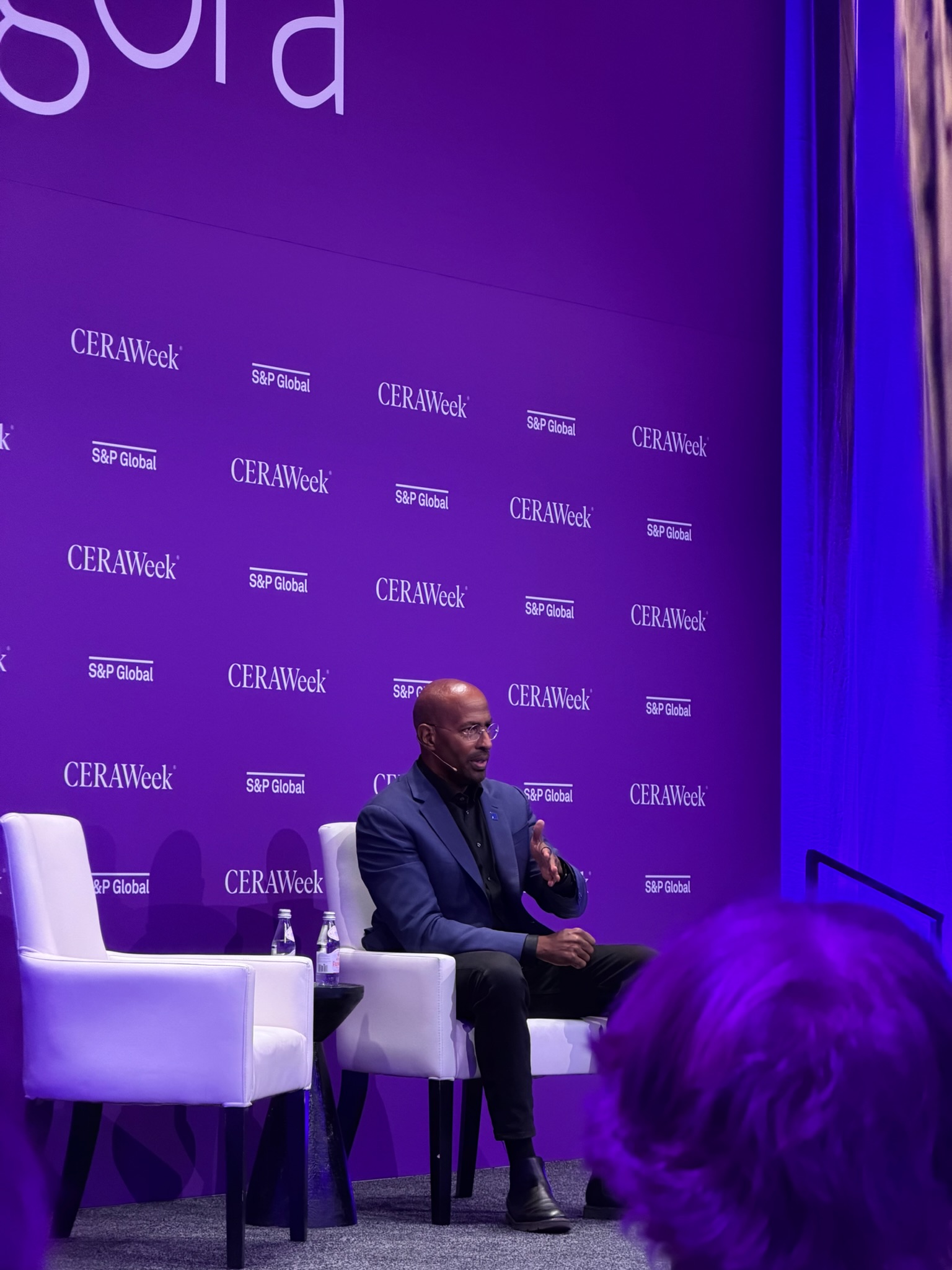
Caption:Van Jones speaks at CERA Week.
Unlike the highly technical conferences they were used to, CERAWeek emphasized the intersection of engineering, business, and policy.
“We’re used to more technical conferences, but this is definitely more of a business conference,” Woods said.
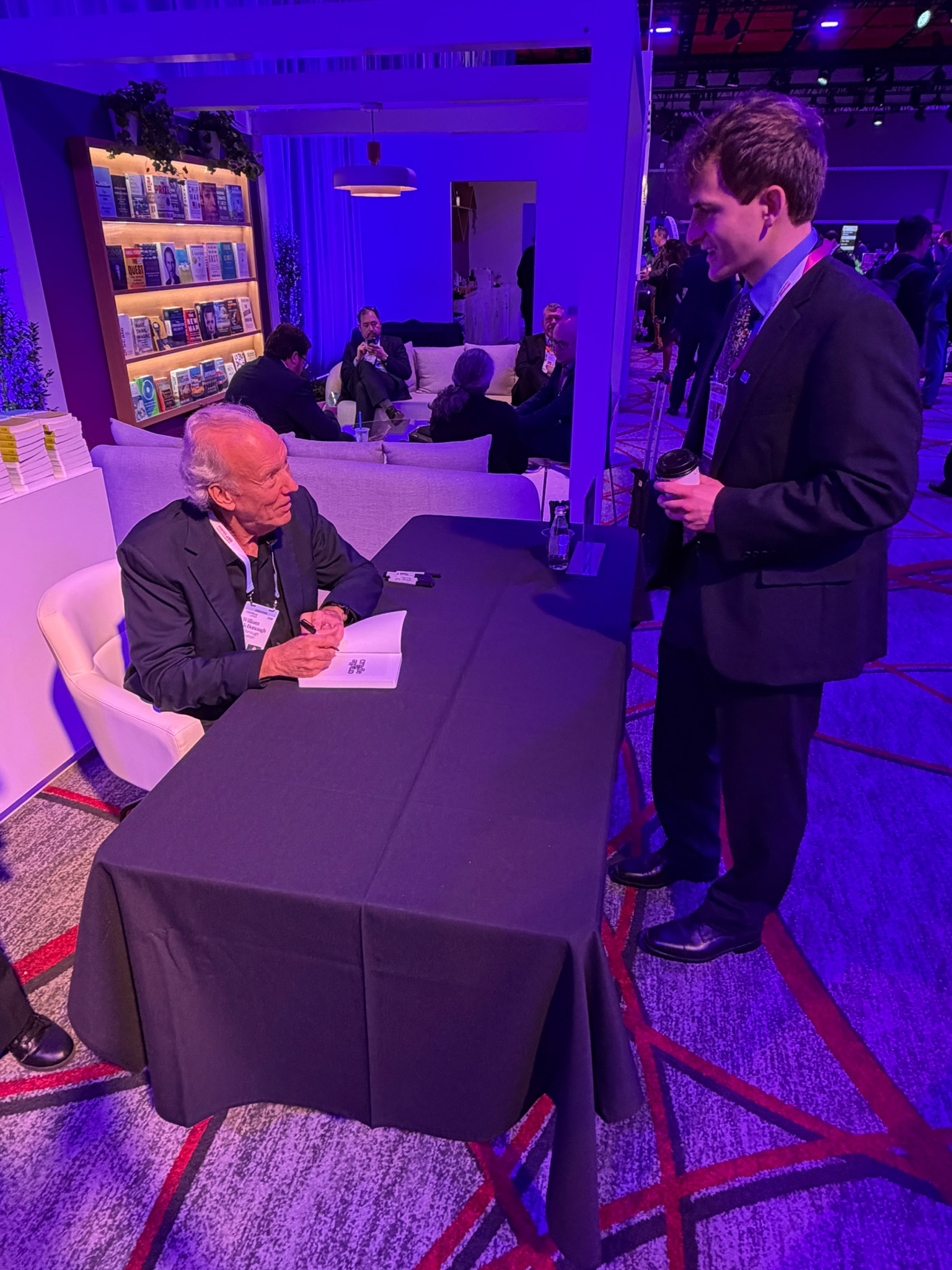
Caption: William McDonough signs a copy of Cradle to Cradle for Andrew Woods at CERA Week.
As part of the NextGen cohort, the students participated in structured sessions and networking opportunities while also exploring the broader conference. They engaged with representatives from major companies like Google, Amazon, and leading energy firms, as well as startups shaping the future of the industry.
Discussions throughout the conference highlighted the complexity of the global energy landscape, with a strong emphasis on collaboration across energy sources.
“In order to solve the energy crisis, we just need more of everything,” Woods said. “It’s not like a one-size-fits-all type of answer.”
Artificial intelligence emerged as a major theme, with companies across sectors showcasing how they are integrating AI into energy production, distribution, and efficiency.
“They pushed AI really heavily, and everyone was using it,” Guengerich said.
The conference also provided exposure to policy and infrastructure challenges, particularly around nuclear energy and energy security, broadening the students’ understanding beyond engineering alone.
“It was good to broaden my perspective,” Woods said. “It showed me what I need to expand on if I want to be competitive in this industry.”
One of the most impactful aspects of the experience was connecting with peers from top universities around the world, including MIT, Stanford, and international institutions.
“It did put into perspective that just because you go to a small school like Montana Tech, you’re not necessarily at a disadvantage,” Guengerich said. “I didn’t feel out of place talking to other students.”
For both students, the experience reinforced the critical role engineers play in shaping the future of energy.
“They push innovation so hard in this industry, and it’s impossible to do that without engineering,” Guengerich said.
Woods, who will graduate this spring, has already accepted a position in the energy sector, working on power grid systems. Guengerich, who is continuing his graduate studies, said the experience strengthened his interest in pursuing a career in energy, particularly in emerging areas like hydrogen and nuclear technologies.
Both students encourage others to explore opportunities in the field.
“Educate yourself on energy—it’s inevitable,” Guengerich said. “There’s a lot of space in that industry, and a lot of support to get into it.”
Their participation in CERAWeek highlights Montana Tech’s growing presence on the global stage and the opportunities available for students to engage with the future of energy.